New Technologies for Processing Waste from Caprolactam and Adipic Acid Production
Caprolactam and adipic acid production generates significant volumes of liquid waste. These wastes contain
valuable chemical products. New technologies make it possible to recover these products, reducing the volume
of waste incineration and air pollution.
-
General Information
-
One of the significant disadvantages of existing caprolactam and adipic acid production
facilities is that significant quantities of liquid waste are generated during the
production process at the stage of cyclohexane oxidation with molecular oxygen from the air.
These wastes, namely sodium adipates (alkaline wastewater, hereinafter referred to as SAPW),
POD oil (X-oil or ANON-oil), the alcohol fraction (hereinafter referred to as AFPC), and a
mixture of esters and carboxylic acids (hereinafter referred to as MECA), contain
significant quantities of valuable chemical products. However, the overwhelming majority of
the above-mentioned wastes are currently sent for thermal treatment (incineration). Hundreds
of thousands of tons of liquid waste are disposed of in this way every year, while millions
of cubic meters of flue gases are released into the atmosphere.
-
These flue gases contain nitrogen oxides, carbon monoxide, and aerosols of soda dust, which
in turn contains manganese, cobalt, and chromium. They contribute to environmental
degradation and are among the major factors contributing to air pollution in areas where
caprolactam and adipic acid production facilities are located. They also require significant
expenditures on fines for atmospheric emissions and result in substantial costs—tens of
millions of US dollars—for the purchase of natural gas used to incinerate the
above-mentioned wastes.
-
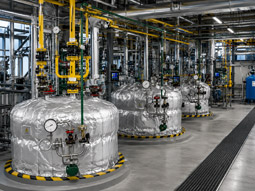
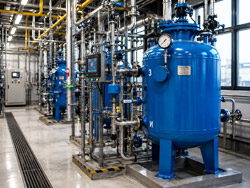
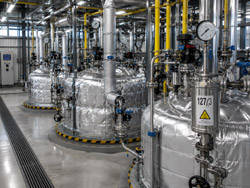
New technologies for processing waste from caprolactam and adipic acid production were
developed by our engineering team in the 1990s and 2000s and successfully tested at a
pilot-scale plant comprising four main process units, each with a volume of 2 m³. The
technologies were tested using waste samples from caprolactam production facilities located
in the former USSR, including CherkasyAzot OJSC (Ukraine), KuibyshevAzot PJSC, KemerovoAzot
OJSC, ShchekinoAzot OJSC, and GrodnoAzot OJSC, as well as waste from adipic acid production
facilities, including SeverodonetskyAzot OJSC and RivneAzot OJSC (Ukraine).
-
The application of these new technologies at caprolactam and adipic acid production
facilities will make it possible to completely eliminate waste incineration, generate
significant additional profit from the sale of valuable chemical products recovered from
these wastes, substantially reduce the negative environmental impact, and save large volumes
of natural gas.
-
The residual water stream with low chemical oxygen demand (COD) is sent for biological
treatment.
-
Prospective Analysis of the Implementation of New Technologies for Processing Liquid Waste from
Caprolactam and Adipic Acid Production
-
Chemical products recovered from the wastes can be used as feedstock for the production of
high-quality polyamide fibers, polyester engineering plastics, polyurethane foams, motor
fuel additives, plasticizers, technical detergents, synthetic coolants (metalworking fluids,
MWFs), varnishes, and solvents.
-
Preliminary calculations show that the sale of chemical products recovered from the wastes
can provide enterprises with significant additional net profit comparable to the profit
generated by their primary production.
-
The following is an approximate calculation of the economic efficiency expected after
implementing our technology for processing liquid waste from the following production
facilities:
Recycling of alkaline wastewater from caprolactam production based on the example of
Kuibyshev Azot PJSC in
the
amount of 140,000 (tons/year)
Table 1
| No. |
Recovered products |
Content (%) |
Quantity of
products in 140 ths.
tons of alkaline
wastewater, tons |
Price
per ton
(thousand USD) |
Total cost
(thousand USD) |
Notes |
| 1. |
Adipic Acid |
12 |
116,800 |
- |
- |
Adipic acid is used to produce dimethyladipinate after esterification with
methanol
|
20,021
dimethyladipinate |
2 |
40,042 |
| 2. |
Resin |
10 |
14,000 |
1 |
14,000 |
technical detergent base |
| 3. |
Cobalt |
0.043 |
60 |
20 |
1,200 |
on metal basis |
| 4. |
Chrome |
0.057 |
80 |
|
|
| 5. |
Sodium sulfate |
31.71 |
44,392 |
0.4 |
17,756 |
on dry basis |
| 6. |
Annual savings on natural gas purchases |
50,000 |
|
| Estimated gross revenue |
122,998 |
|
Recycling of ANON-oil generated during cyclohexane oxidation and dehydrogenation based on
the
example
of Grodno Azot
OJSC in
the amount of 17,000 tons/year
Table 2
| No. |
Recovered products |
Content (%) |
Quantity of ANON-oil,
tons |
Price
per ton
(thousand USD) |
Total cost
(thousand USD) |
Notes |
| 1. |
Mixture of cyclohexanol and cyclohexanone |
15 |
2,550 |
2 |
5,100 |
|
| 2. |
Cyclohexanone dimer (dianon) |
45 |
7,650 |
1 |
7,650 |
Raw material for the production of alcohol (2-cyclohexylcyclohexanol), corrosion inhibitors,
ortho-phenylphenol, fragrances, and phenyl-formaldehyde resin |
| 3. |
Polymer resin |
40 |
6,800 |
1 |
6,800 |
Base for anti-corrosion coatings
|
| Estimated gross revenue |
19,550 |
|
Recycling of esters and acids mixture (EAM) based on the example of BASF (Belgium) in the
amount of 80,000
tons/year.
Table 3
| No. |
Recovered products |
Content (%) |
Quantity of
products in 80 ths.
tons of EAM, tons |
Price
per ton
(thousand USD) |
Total cost
(thousand USD) |
Notes |
| 1. |
Adipic Acid |
27 |
21,600 |
|
|
Adipic acid is used to produce dimethyladipinate after esterification with
methanol
|
25,742
dimethyladipinate |
2 |
51,484 |
| 2. |
Ɛ - oxycapronic acid |
23 |
18,400 |
2.5 |
46,000 |
Monomer for production of polycaprolactone |
| 3. |
Polymer acid resin |
10 |
8,000 |
1 |
8,000 |
Concentrate for production of technical detergents and synthetic coolants
|
| 4. |
Other acids |
10 |
8,000 |
1 |
8,000 |
|
| 5. |
Water |
30 |
24,000 |
|
|
|
| 6. |
Presumed annual savings on natural gas purchases |
5,000 |
|
| Estimated gross revenue |
118,484 |
|
Recycling of alcohol fraction of caprolactam production based on the example of BASF
(Belgium) in the amount
of
3,000 tons/year
Table 4
| No. |
Recovered products |
Content (%) |
Quantity of products
in 3,000 tons of
alcohol fraction,
tons |
Price
per ton
(thousand USD) |
Total cost
(thousand USD) |
Notes |
| 1. |
N-pentanol |
46 |
1,380 |
2.5 |
3,450 |
Raw materials for the production of potassium xanthogenate as well as n-amialyl acetate
|
| 2. |
Hexanal, cyclohexanone |
47 |
1,410 |
1.5 |
2,115 |
Raw material for the production of aldehyde and keto resins used in paints and
varnishes for glossing |
| 3. |
Heptanone |
1 |
30 |
1.5 |
45 |
| 4. |
Water |
6 |
180 |
|
|
|
| Estimated gross revenue |
5,610 |
|